

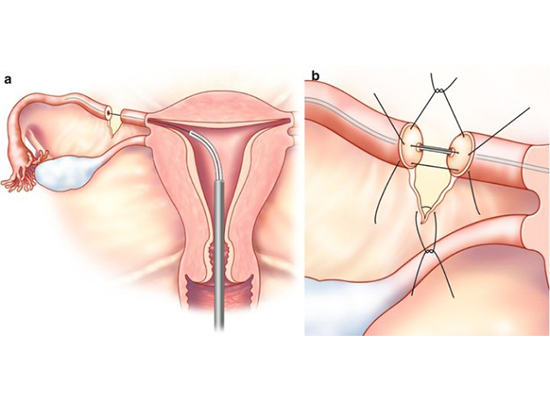
Hysteroscopic Tubal Cannulation
Hysteroscopic tubal cannulation is a minimally invasive procedure used to treat fallopian tube blockages, which can be a cause of infertility in women. During this procedure, a thin, flexible tube with a camera (hysteroscope) is inserted through the cervix and into the uterus. Once the hysteroscope is in place, specialized instruments are used to clear any blockages in the fallopian tubes, allowing for the passage of eggs and increasing the chances of natural conception.
Hysteroscopic tubal cannulation is typically performed as an outpatient procedure under local or general anesthesia. It offers several advantages over traditional surgical methods for treating fallopian tube blockages, including faster recovery times, minimal scarring, and reduced risk of complications. Additionally, hysteroscopic tubal cannulation can be an effective alternative to more invasive fertility treatments such as in vitro fertilization (IVF), particularly for women with tubal blockages as the primary cause of infertility.
Benefits of Hysteroscopic Tubal Cannulation
- Minimally invasive procedure with fewer risks and complications compared to traditional surgery.
- Improves fertility by clearing blockages in the fallopian tubes, increasing the chances of natural conception.
- Can be performed as an outpatient procedure, allowing for faster recovery and minimal disruption to daily activities.
- Offers a less expensive alternative to more invasive fertility treatments such as IVF.
- Minimal scarring and tissue damage, preserving the overall health of the reproductive organs.
- May be suitable for women with certain types of tubal blockages, including proximal tubal occlusion.
- Provides a potential solution for couples struggling with infertility due to fallopian tube issues.
- Allows for the possibility of natural conception without the need for assisted reproductive technologies.